Should you insulate your loft floor or your roof rafters?
If your loft is unheated and you want warmer rooms below, insulate the loft floor. If you have a bedroom built into the roof, insulate the slopes and walls around that room. The choice depends on where you want to keep the warmth and how you use the space above the hatch.
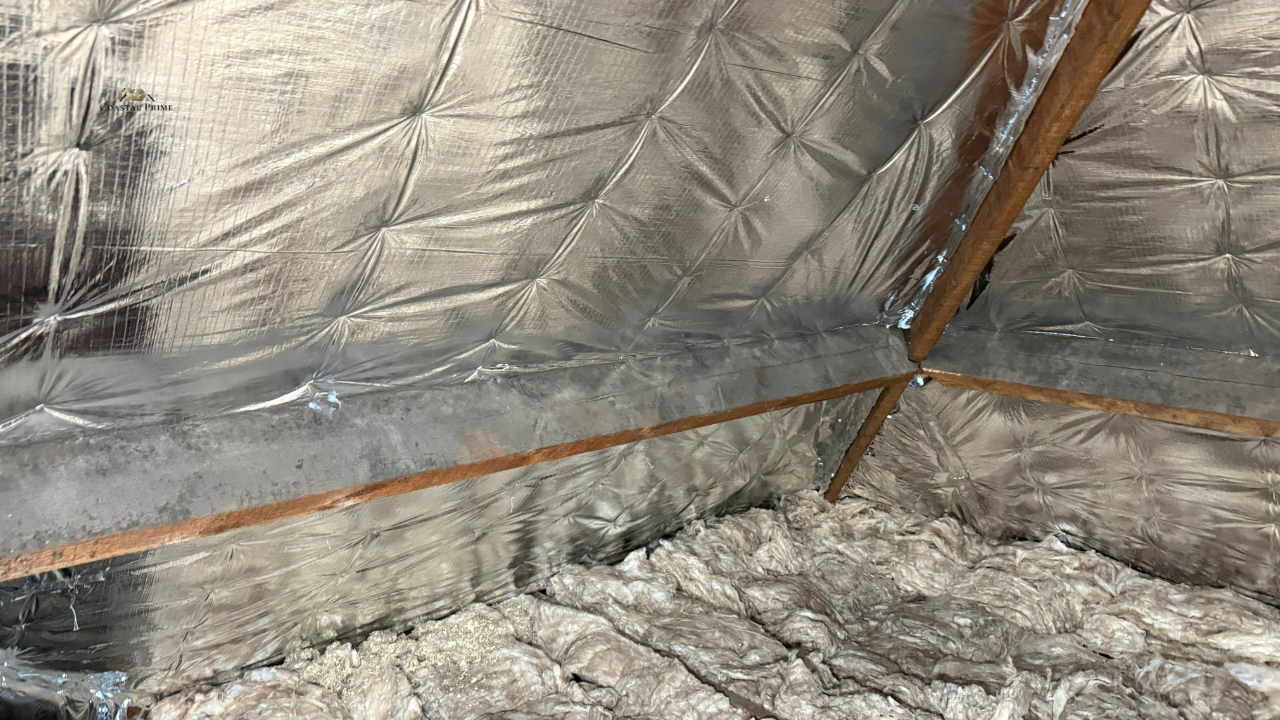
A loft insulation overhaul puts fresh mineral wool above the ceilings of the rooms you heat. SuperQuilt rafter insulation follows the pitch of the roof. Here’s how to choose between them if you have an empty loft, use it for storage or have a bedroom under the eaves.
What’s the difference between loft floor and rafter insulation?
The joists run across the loft floor, just above the ceilings of the rooms below. Mineral wool laid between and over them helps those rooms hold their heat while the loft stays cooler. The rafters are the sloping timbers that support the roof. Insulation fitted along those slopes can bring the space beneath them inside the insulated part of the home, provided the adjoining walls and gaps are dealt with too.
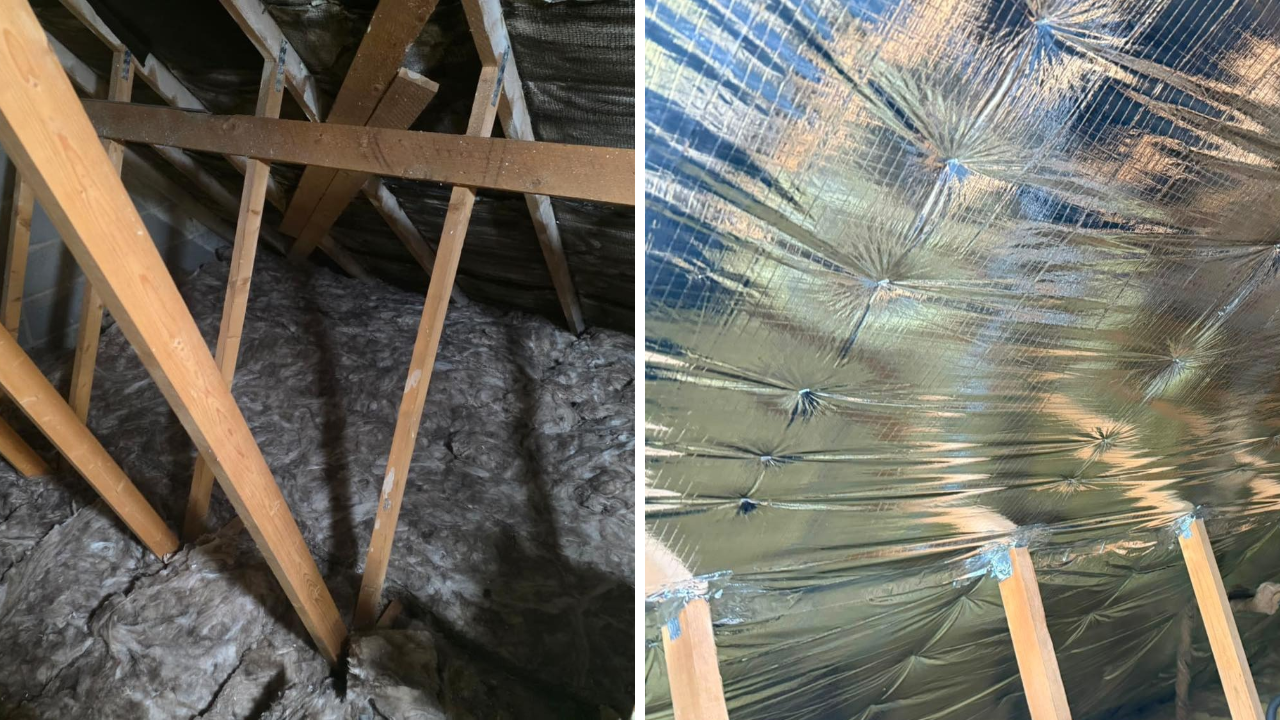
Loft floor insulation
Mineral wool laid across the loft floor above the rooms below.
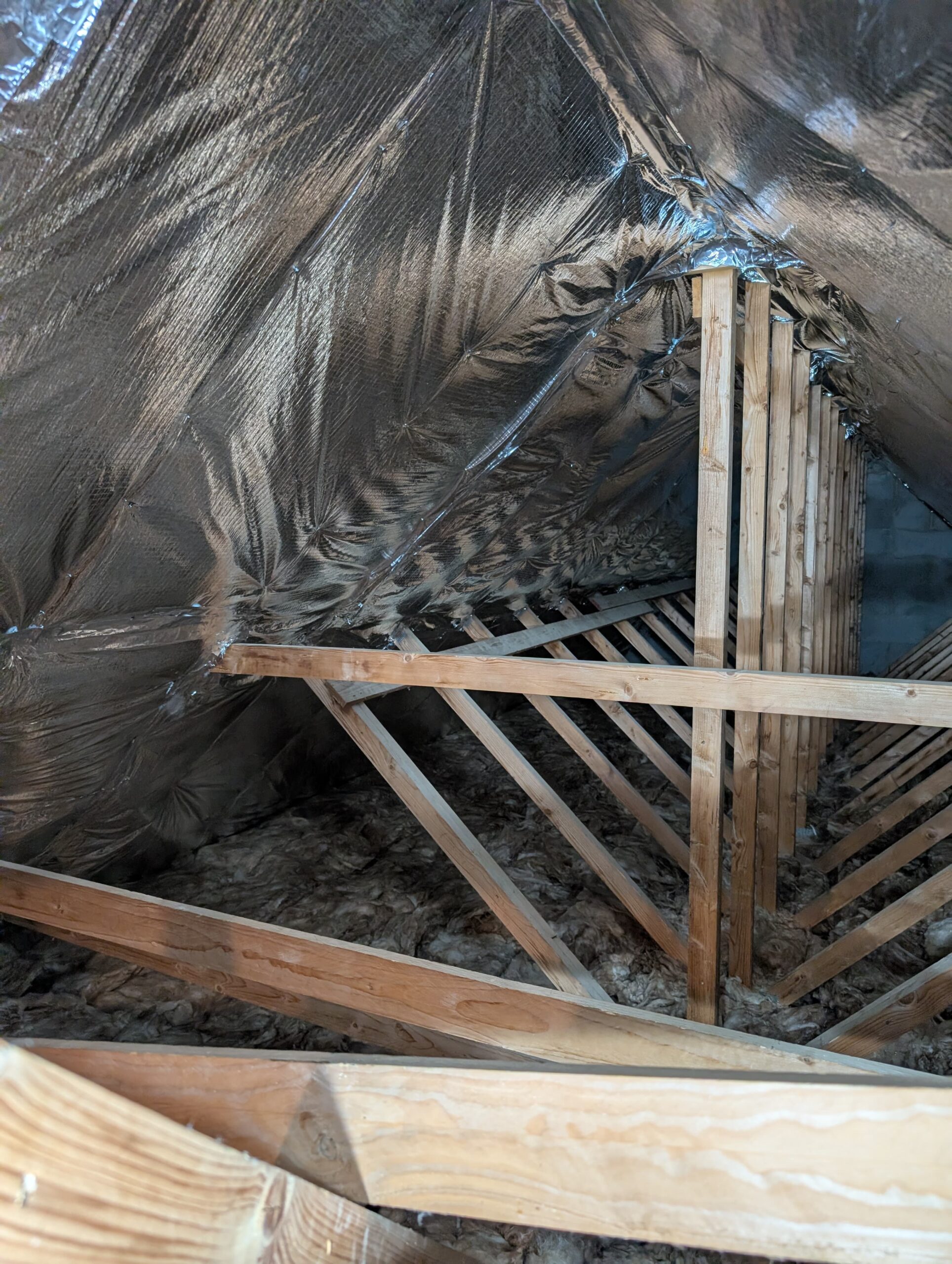
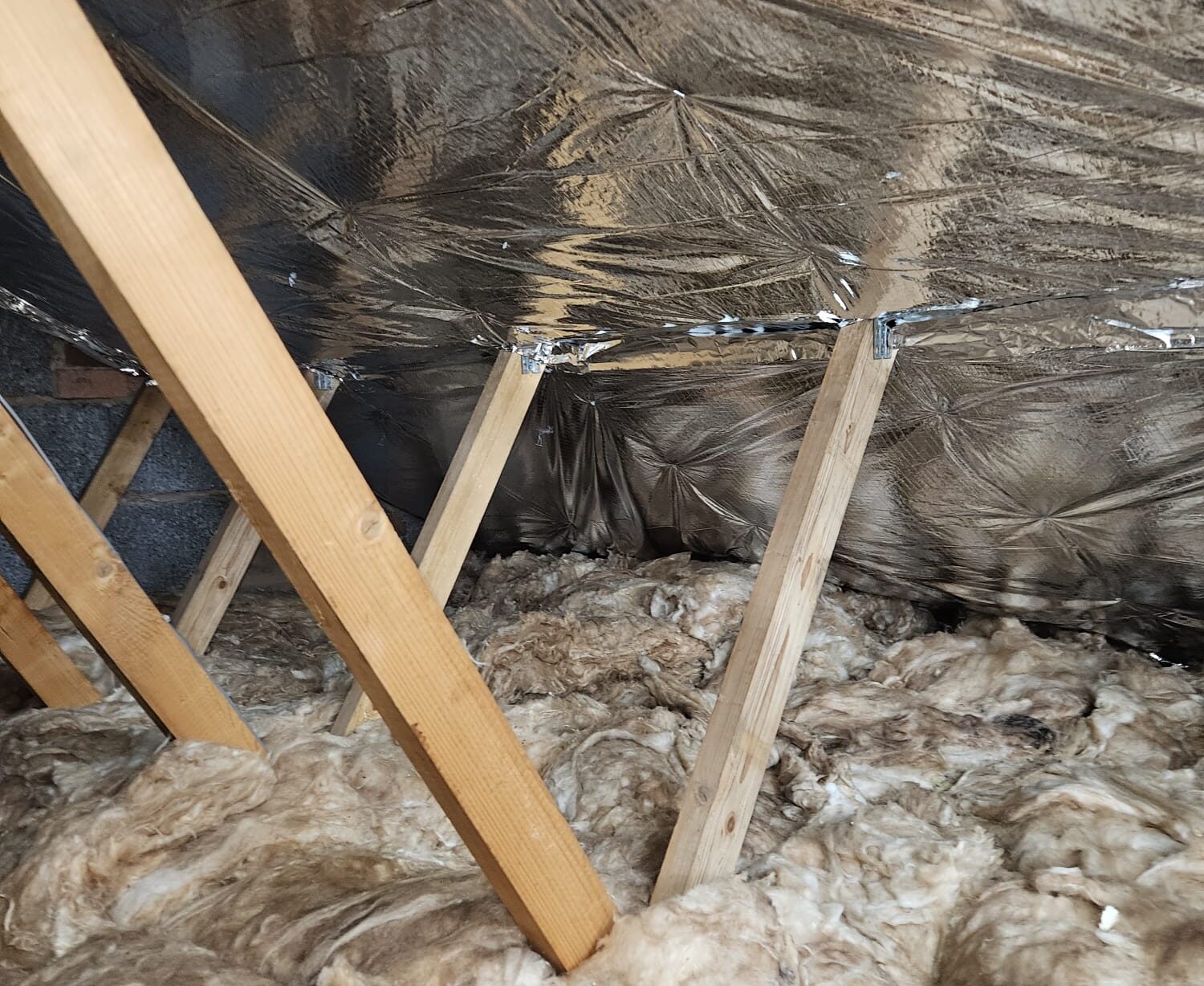
SuperQuilt rafter insulation
Reflective multifoil fitted along the sloping underside of the roof.
When does a loft insulation overhaul make sense?
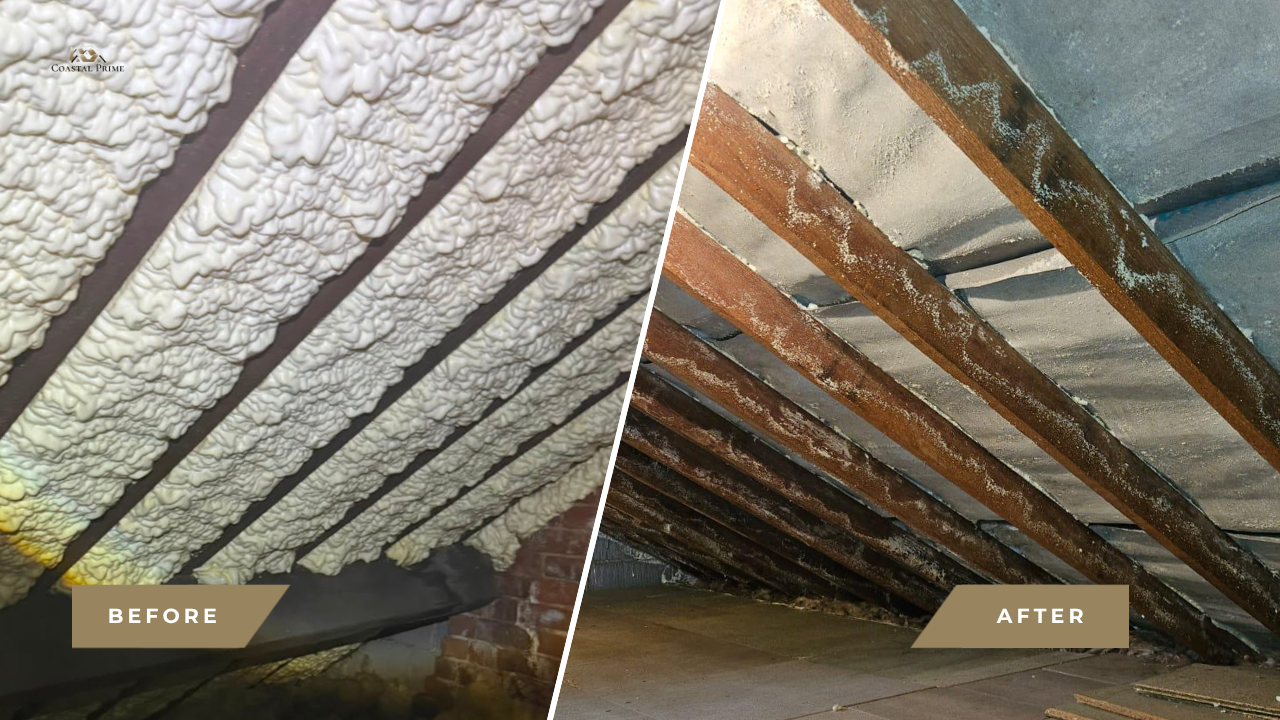
A loft insulation overhaul is worth considering when the existing mineral wool is damaged, badly compressed or contaminated and the rooms below are difficult to keep warm. Lifting the old material gives our installers access to gaps that may have been hidden for years.
We remove and dispose of the old insulation, clean between the joists, check the airflow at the eaves and lay fresh mineral wool across the floor. If the existing insulation is dry and in good condition, a top-up may be all you need. If it’s wet, the first step is to find out why.
When is SuperQuilt insulation at rafter level a good fit?
If the space you want to keep warm sits under a pitched roof, SuperQuilt rafter insulation is an option worth exploring. Its flexible layers of foil and insulating wadding follow the roof slopes. That can be useful in a room with low sloping ceilings, where every centimetre of headroom matters.
As an approved YBS SuperQuilt installer, we look at the depth of the rafters, the air spaces the system needs and how it will meet the walls. In a finished bedroom, we also explain whether we can reach the slopes from the eaves or need to open up plasterboard. Ask how much headroom the complete installation, including its finish, will take up.
Which approach suits your loft?
1. An unused loft above the bedrooms
Floor insulation is usually the most straightforward choice. If you only open the hatch to check the water tank, keeping the bedrooms warm is the priority. The loft may get colder afterwards, so the survey should also cover the hatch, tank and pipework.
2. A loft used for storage
You can often insulate the floor and keep space for boxes. Where the structure is suitable, raised boarding can sit above the mineral wool without squashing it. Show the surveyor the route you use from the hatch and how much storage you actually need.
3. A bedroom built into the roof
Follow the shape of the bedroom. The sloping ceiling, the low walls beside the bed and the sides of a dormer can all face colder spaces. SuperQuilt may suit the slopes, while mineral wool may suit an accessible flat ceiling above. Tell us if a conversion is planned so today’s work fits the future layout.
For more about the materials, read our guide to choosing the right insulation for your home.
What does a loft insulation survey check?
We start with the room you want to keep warm. In an upstairs bedroom, heat may escape through the ceiling into the loft above. In a loft bedroom, the slopes and the low walls beside the bed may face cold spaces. From there, we look at the existing insulation and how we can reach those areas.
| What we check | Loft insulation overhaul | SuperQuilt rafter insulation |
|---|---|---|
| Insulation coverage | Gaps around the loft hatch, uneven mineral wool and patches compressed beneath boards. | Where the roof slopes meet a gable wall, a dormer or the low walls of a loft room. |
| Moisture and airflow | Whether the wool is damp or blocks the airflow at the eaves. | Signs of moisture on the roof lining or timbers and how the roof will stay ventilated. |
| Access and space | Which boards can be lifted and how you’ll reach tanks, pipes or stored belongings afterwards. | Whether the slopes are accessible from the eaves and how the finished ceiling will affect headroom. |
Loft floor and rafter insulation FAQs
Can you insulate both the loft floor and the rafters?
Yes, where they protect different parts of the home. In a converted loft, for example, the slopes around the bedroom may need insulation, while the floor of an adjoining unheated eaves space protects the room below. Ask your installer to show you where the two layers meet.
Do mineral wool and SuperQuilt need the same thickness?
No. For mineral wool on a loft floor, we check the depth and condition of the existing insulation. For SuperQuilt at rafter level, we look at the space needed for the quilt, the required air gaps and any additional insulation in the roof design.
What if there’s condensation in the loft?
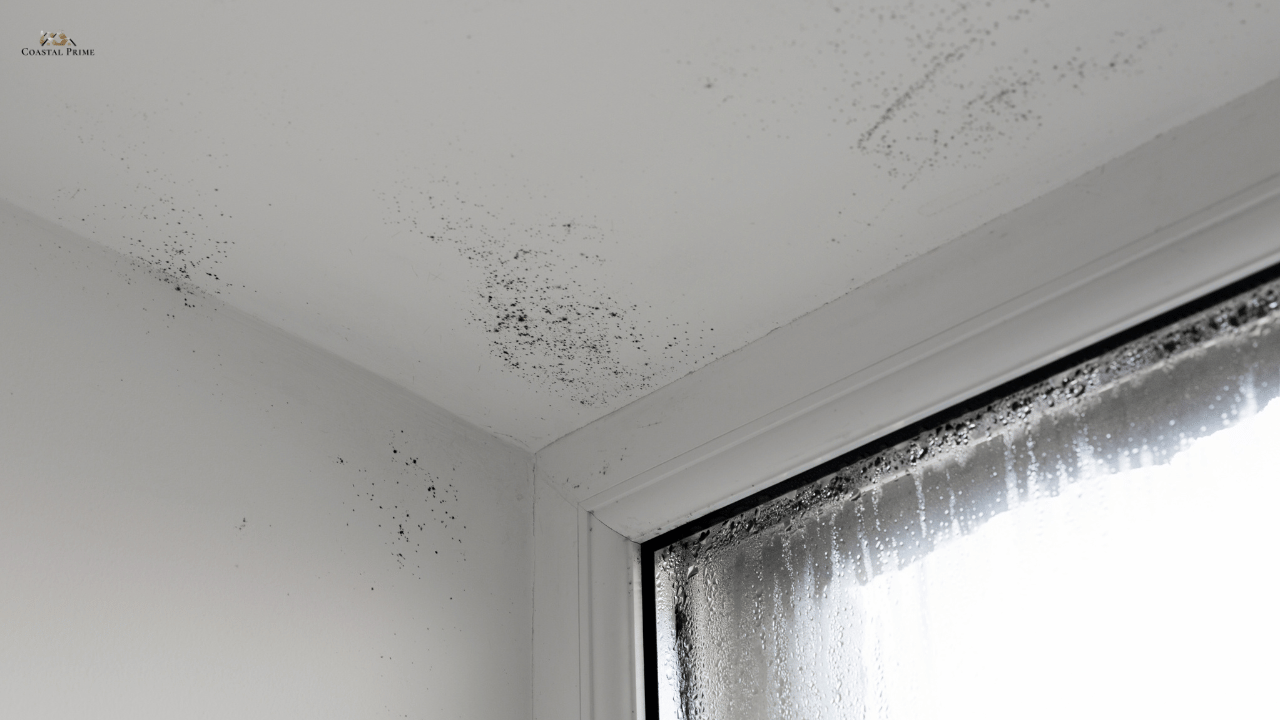
Have the cause checked before adding insulation. Droplets on the roof lining or damp patches in the wool can point to condensation, a leak or both. The survey should identify any repairs needed and how ventilation will be maintained once the insulation is in place.
Book a loft insulation survey with Coastal Prime
Unsure whether to insulate your loft floor, your rafters or both? During a home survey, we’ll look at how you use the loft, check the insulation already in place and show you where any new insulation would go.
Call 0203 051 7316 or book your free, no-obligation home survey.